
Your Silence Is Loud...

I want to speak as clearly and honestly as I can.
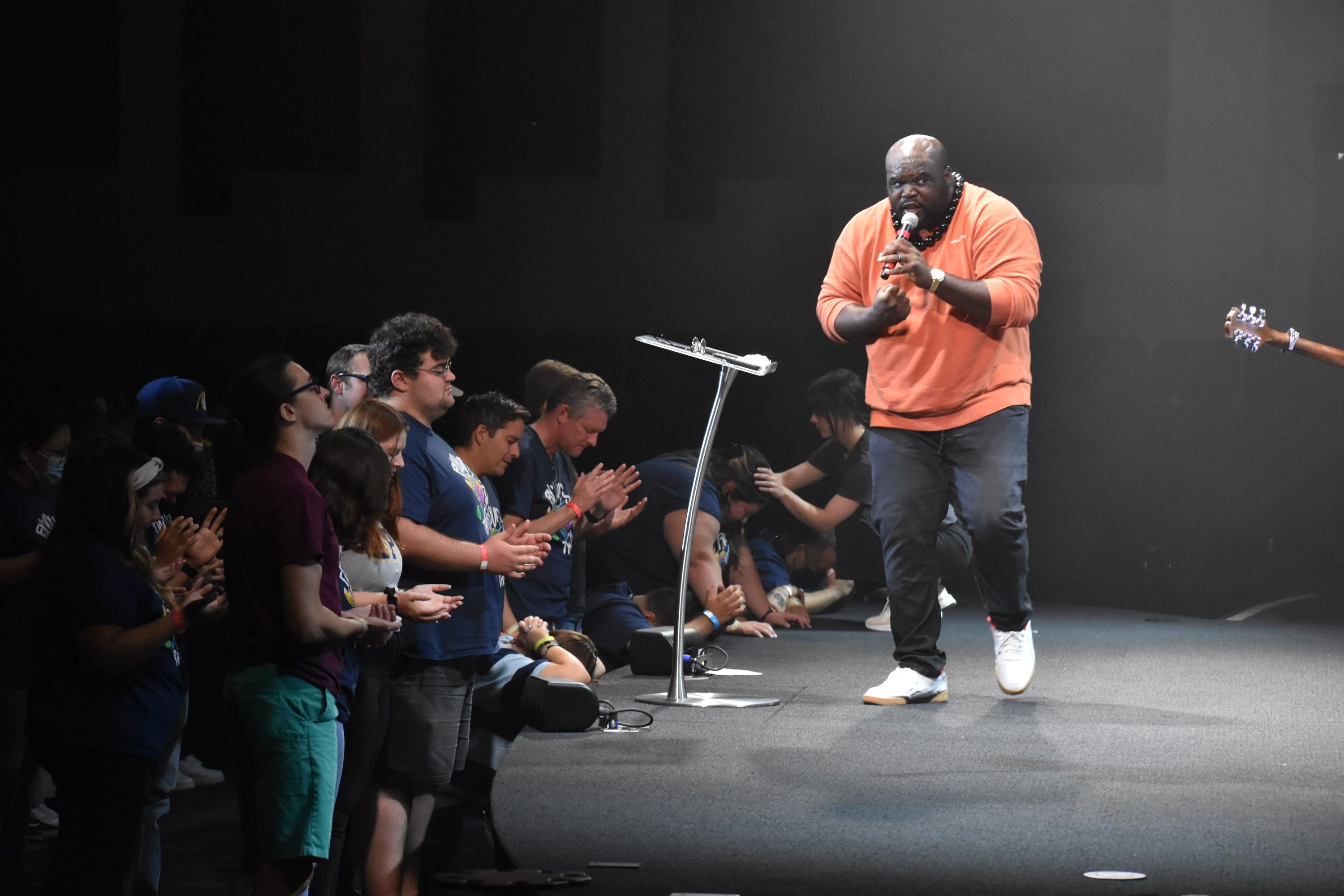
As a Christian and a Black man, I have spent the last several years traveling, teaching, and ministering in many kinds of churches, across cultures, traditions, and communities. I count it a privilege to walk alongside people who love Jesus deeply and who are sincerely trying to live out their faith in complicated times.
I have made it my intentional practice to echo the heart of Christ—to love broadly, to advocate for all people, and to trust that the gospel is truly good news for everyone. I do not enter spaces looking for offense or division. I believe deeply in unity rooted in Christ.
But commitment to unity does not erase the experience of being wounded.
When people in positions of power participate in or amplify racism, it lands differently for me. Not as an abstract issue. Not as a headline. But personally. Historically. In my body and in my memory. And in those moments, what matters deeply is not only what is said publicly, but what is seen and responded to by those who call themselves my brothers and sisters.
Recently, a video circulated—shared by Donald Trump—depicting Barack Obama and Michelle Obama as apes. That imagery is not new. It is a long-standing racist trope used to dehumanize Black people and to make exclusion, cruelty, and violence feel justified.
For many Black Americans, this was not shocking.
It was familiar.
I want to be clear: this is not primarily a political issue for me. It is a discipleship issue.
There is a line often attributed to Martin Luther King Jr. that many of us know well: “In the end, we will remember not the words of our enemies, but the silence of our friends.” That sentence is not meant to shame. It is meant to tell the truth about how silence functions.
Silence is not neutral. It communicates something, whether we intend it to or not.
When racism is met with quiet, it communicates tolerance.
When harm is visible and unaddressed, it communicates distance.
And for those who are affected, it can sound like, This is not worth disrupting my comfort.
I understand the hesitation many people feel. The fear of saying the wrong thing. The fear of being misunderstood. The fear of fracturing relationships or being labeled divisive. Those concerns are real.
But the call of Jesus has never been to preserve ourselves.
It has always been to be faithful.
Scripture does not shape us into careful observers. It forms us into witnesses. And witnesses name what they see.
At a certain point, refusing to call something what it consistently shows itself to be is not humility. It is avoidance. And avoidance, even when well-intentioned, does not reflect the way of Christ.
Jesus did not confuse compassion with silence.
He did not equate grace with passivity.
He spoke hard truths because love required it.
I also want to be clear about motivation.
Standing against racism is not a moral flex.
It is not about becoming a justice warrior.
It is not about being seen as virtuous or progressive.
The courage to speak when it costs you does not come from personality or ideology. It comes from the gospel and the work of the Holy Spirit.
The same Spirit who led Jesus toward the cross rather than away from it.
The same Spirit who empowered the early Church to speak when silence would have been safer.
The same Spirit who shaped the convictions of Dietrich Bonhoeffer, who refused a faith that protected itself at the expense of others.
The same Spirit who sustained Martin Luther King Jr., whose pursuit of justice was rooted not in outrage, but in the life, death, and resurrection of Jesus.
This kind of faith is not loud.
It is not performative.
It is often costly and misunderstood.
But it is honest.
And honesty matters. Because love without truth becomes sentimentality, and truth without love becomes harm. The gospel refuses both.
I am not asking for perfect language or statements that solve everything. I am asking for sight and response. For brothers and sisters who see when harm is done and are willing, in faithful and appropriate ways, to do something about it.
When I am wounded by the actions of people in power, I don’t need others to fix it. I need them to see it, to name it honestly, and to let love move them toward truth.
That is the narrow road.
It always has been.
I am committed to walking it with humility, grace, and faithfulness. And I am inviting all of us, as followers of Jesus, to continue walking it together.